 Save
Save My friend texted me a photo of a salmon bowl from her favorite lunch spot downtown, and I realized I'd been ordering the same thing every week instead of just making it at home. That afternoon, I stood in my kitchen with a piece of salmon, some soy sauce, and the sudden determination to figure out what made theirs taste so good. Turns out, it wasn't magic—it was the kind of glaze that coats the fish in glossy, umami-rich perfection while the rice stays fluffy underneath. Now I make this bowl at least twice a month, and honestly, mine tastes better because I can pile on extra sesame seeds without guilt.
I made this for my mom's book club potluck, and I watched someone take her first bite, close her eyes, and ask me for the recipe right there on the deck. She said it tasted like the fancy sushi place they go to for birthdays, except somehow fresher. That moment made me realize this bowl isn't just healthy eating—it's the kind of food that makes people feel taken care of, like someone spent more time on them than they actually did.
Ingredients
- Salmon fillets (4, about 150 g each): Look for pieces with vibrant color and firm flesh; wild-caught salmon has deeper flavor, but whatever you find at your market works beautifully.
- Soy sauce (3 tbsp): This is the backbone of your glaze, so don't use the ultra-thin stuff in the tiny bottles—grab the regular kind or tamari if you need gluten-free.
- Honey (2 tbsp): Balances the saltiness and caramelizes slightly in the oven, creating an almost sticky, sweet-savory surface on the fish.
- Fresh ginger, grated (1 tbsp): The smell alone makes your kitchen feel alive; use a microplane for the finest texture and easiest prep.
- Garlic, minced (2 cloves): Don't skip this or use powder—fresh garlic melts into the glaze and adds a subtle sharpness that bottled versions can't match.
- Rice vinegar (1 tbsp): Adds brightness and keeps the glaze from tasting too heavy or sweet; regular vinegar works if you're in a pinch.
- Sesame oil (1 tbsp): Just a touch of this nutty oil transforms the whole glaze—it's the ingredient that makes people ask what's different.
- Cornstarch (1 tsp, optional): Use this only if you want a glossy, coating consistency; skip it if you prefer a thinner glaze that pools on the rice.
- Jasmine or sushi rice (2 cups uncooked): Jasmine is more delicate and fragrant; sushi rice is stickier and easier to eat with chopsticks if you're feeling fancy.
- Carrots, cucumber, and red bell pepper (1 cup each, julienned): The crunch is essential here—these vegetables stay bright and crisp, offering a textural contrast to the soft salmon and rice.
- Edamame, shelled and cooked (1 cup): Buy frozen and thawed rather than fresh to save yourself an hour of shelling; they add protein and a slightly sweet, nutty note.
- Toasted sesame seeds (2 tbsp): Toasting them yourself takes two minutes in a dry skillet and makes an enormous difference in flavor and aroma.
- Scallions, thinly sliced (2): The green parts especially add a sharp, oniony freshness that brightens the entire bowl.
Tired of Takeout? 🥡
Get 10 meals you can make faster than delivery arrives. Seriously.
One email. No spam. Unsubscribe anytime.
Instructions
- Rinse and cook your rice:
- Run cold water over the rice in a fine-mesh strainer, stirring gently with your fingers until the water runs almost clear—this removes excess starch and keeps grains from clumping. Combine rinsed rice with 2½ cups water in a saucepan, bring to a boil, then immediately drop the heat to the lowest setting, cover with a lid, and let it sit undisturbed for 15 minutes while you prep everything else.
- Make the glaze while the rice cooks:
- Whisk together soy sauce, honey, grated ginger, minced garlic, rice vinegar, and sesame oil in a small bowl until the honey dissolves and everything looks glossy. If you're using cornstarch for a thicker consistency, dissolve it in 1 tablespoon of water first, then stir it in and set the glaze aside.
- Get your oven and baking sheet ready:
- Preheat your oven to 200°C (400°F) and line a baking sheet with parchment paper so the salmon won't stick and cleanup is nearly effortless.
- Glaze and bake the salmon:
- Pat the salmon fillets dry with a paper towel—this helps the glaze stick better—then place them skin-side down on your prepared sheet and brush generously with the soy-ginger glaze, reserving a few tablespoons to finish with later. Slide the sheet into the oven and bake for 12 to 14 minutes, depending on thickness; the fish is done when it's opaque and flakes easily with a fork.
- Thicken the reserved glaze:
- While the salmon bakes, pour the remaining glaze into a small saucepan and bring it to a gentle simmer over medium heat, stirring occasionally for 1 to 2 minutes if you used cornstarch. Remove from heat immediately so it doesn't reduce too much and become overly concentrated.
- Prep your vegetables in a rhythm:
- Using a sharp knife or mandoline, julienne the carrots, cucumber, and bell pepper into thin, even matchsticks; arranging them on a cutting board as you go makes assembly feel organized and almost meditative.
- Assemble each bowl with intention:
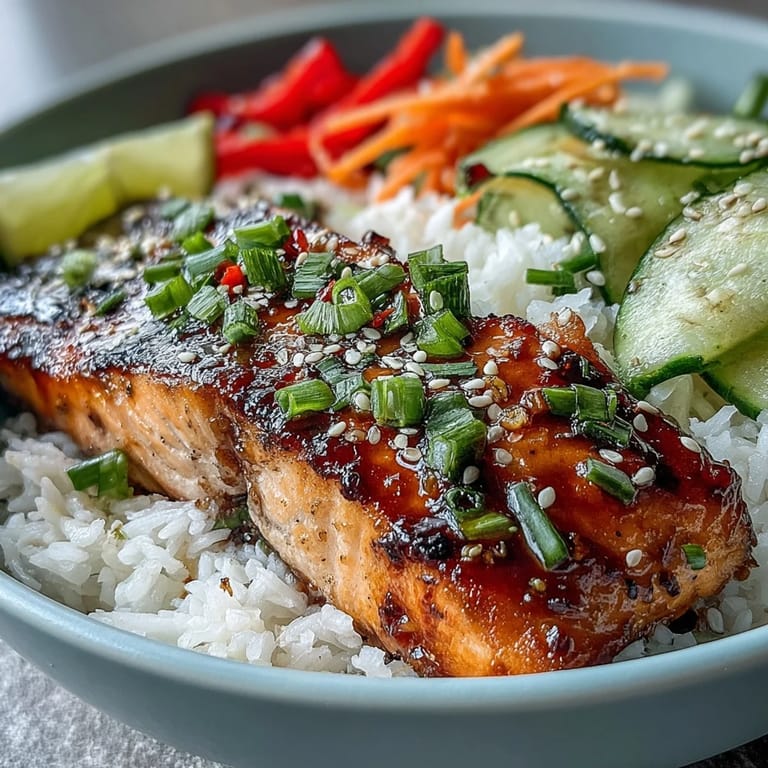
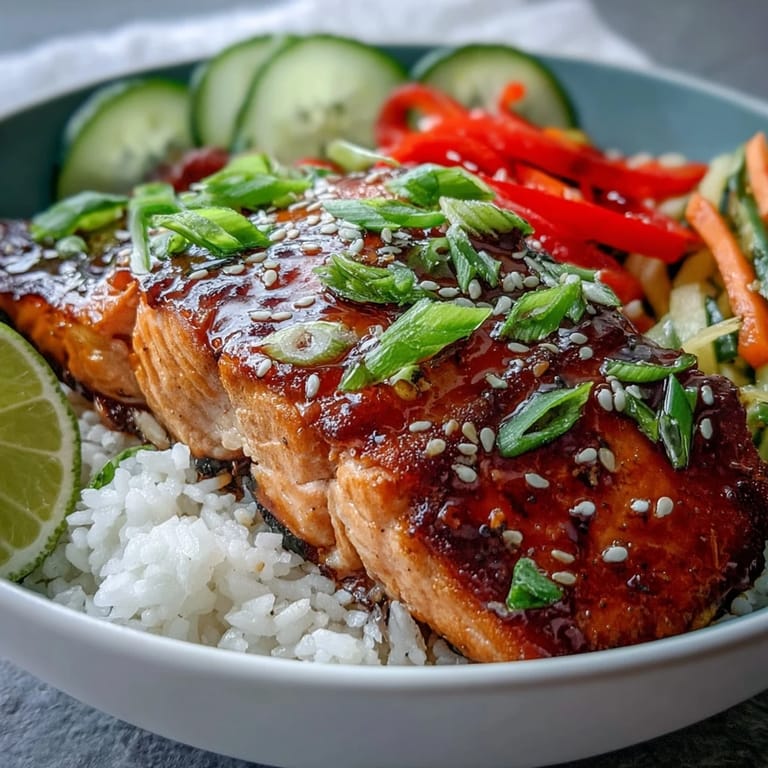
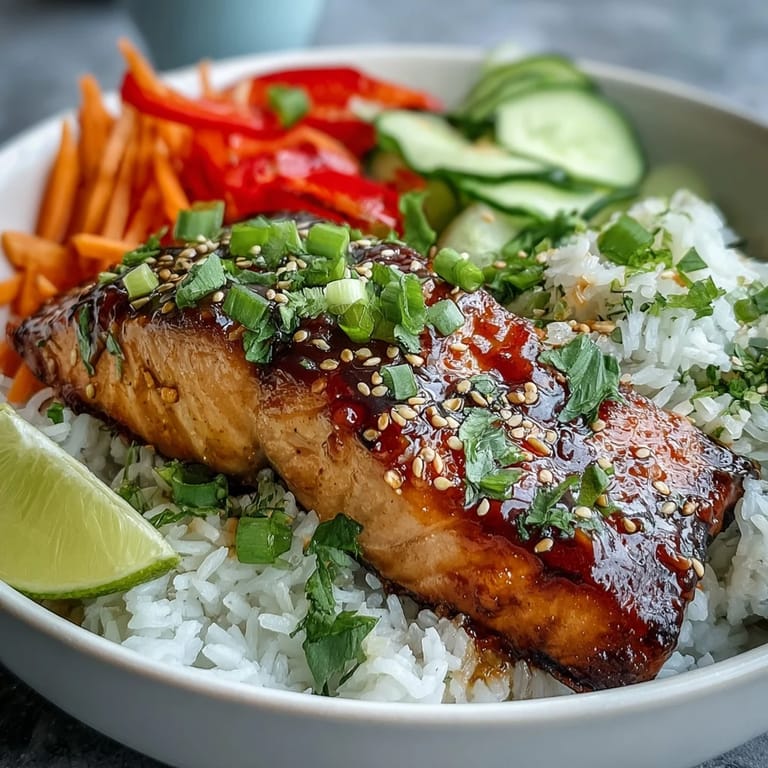
- Divide the fluffy rice among four bowls, creating a small well in the center where the salmon will sit. Arrange the baked salmon on top, then nestle the julienned vegetables and edamame around it in little piles so each bowl looks as good as it tastes.
- Finish with a drizzle and garnish:
- Spoon the thickened glaze over the salmon and rice, then scatter toasted sesame seeds and sliced scallions over everything; serve with lime wedges so people can squeeze fresh citrus over the top if they want that extra brightness.
 Save
Save Last winter, I made this bowl on a Tuesday evening when my roommate had a terrible day at work, and she came home to find bowls already plated and waiting in the fridge with a little note. She sat at the kitchen table eating, and her shoulders visibly relaxed with each bite—the warmth of the rice, the brightness of the vegetables, the richness of that glaze all working together to say what words couldn't. That's when I understood that this recipe is more than efficiency and nutrition; it's a way of showing someone they matter.
The Magic of the Soy-Ginger Glaze
The glaze is honestly what separates a good salmon bowl from one you'll crave all week. I used to think glazes required some special technique, but it's really just about balancing salt, sweetness, umami, and acid—soy provides salt and depth, honey adds sweetness and shine, ginger and garlic bring warmth and complexity, and vinegar keeps everything bright. The sesame oil is your secret weapon; it adds a toasted nuttiness that makes people think you've spent hours developing the recipe.
Why This Bowl Feels Like Restaurant Food
The key is treating each element separately and then coming together at the end—baked salmon, fluffy rice, crisp raw vegetables, and a proper glaze all shine individually before they become something greater together. It's the opposite of throwing everything in a pot; instead, you're building layers of texture and temperature that keep every bite interesting. When people eat this, they taste the care in the individual components.
Variations and Swaps That Work
I've made this bowl about a hundred different ways depending on what's in my fridge and what my mood is that evening. Sometimes I use brown rice or quinoa instead of jasmine, sometimes I add avocado slices or pickled ginger, and once I threw in some shredded nori and it absolutely elevated the whole thing. The base recipe is flexible enough to accommodate whatever vegetables look good at the market or whatever protein you're cooking that week.
- Brown rice and quinoa both work beautifully if you want a whole grain option, though you'll need to adjust cooking times and water ratios accordingly.
- Add avocado, pickled ginger, or even a soft-boiled egg on top for richness and extra flavor dimensions that complement the glaze.
- Use tamari instead of soy sauce for a gluten-free version, and everything else stays exactly the same without any compromise in taste.
 Save
Save This bowl has become my answer to the question of what to cook when you want something that feels special but doesn't require a complicated night in the kitchen. It's restaurant-quality, genuinely healthy, and somehow always tastes like you care more than you actually had to work.
Recipe FAQs
- → Can I use other types of fish instead of salmon?
Yes, you can substitute salmon with other fatty fish like mackerel, trout, or sea bass. White fish such as cod or halibut also work well, though they may require slightly less cooking time to prevent drying out.
- → How do I store leftovers?
Store components separately in airtight containers in the refrigerator for up to 3 days. Keep the salmon, rice, and vegetables in separate containers to maintain texture. Reheat salmon gently in the oven or microwave.
- → Can I make the glaze ahead of time?
Absolutely! The soy-ginger glaze can be prepared up to 3 days in advance and stored in the refrigerator. You may need to warm it slightly before brushing on the salmon if it has thickened.
- → What vegetables work best in this bowl?
While carrots, cucumber, and red bell pepper are classic choices, you can also add shredded cabbage, snap peas, radishes, or steamed broccoli. The key is maintaining a variety of colors and textures for an appealing presentation.
- → Is this bowl spicy?
The original version is mild and focuses on savory, sweet, and tangy flavors. If you prefer heat, add sriracha to the glaze, sliced jalapeños as a garnish, or red pepper flakes to the vegetable mix.
- → Can I grill the salmon instead of baking?
Yes, grilling works beautifully. Preheat your grill to medium-high heat and cook the salmon for about 4-5 minutes per side. The glaze may caramelize more quickly on the grill, so watch closely to prevent burning.