 Save
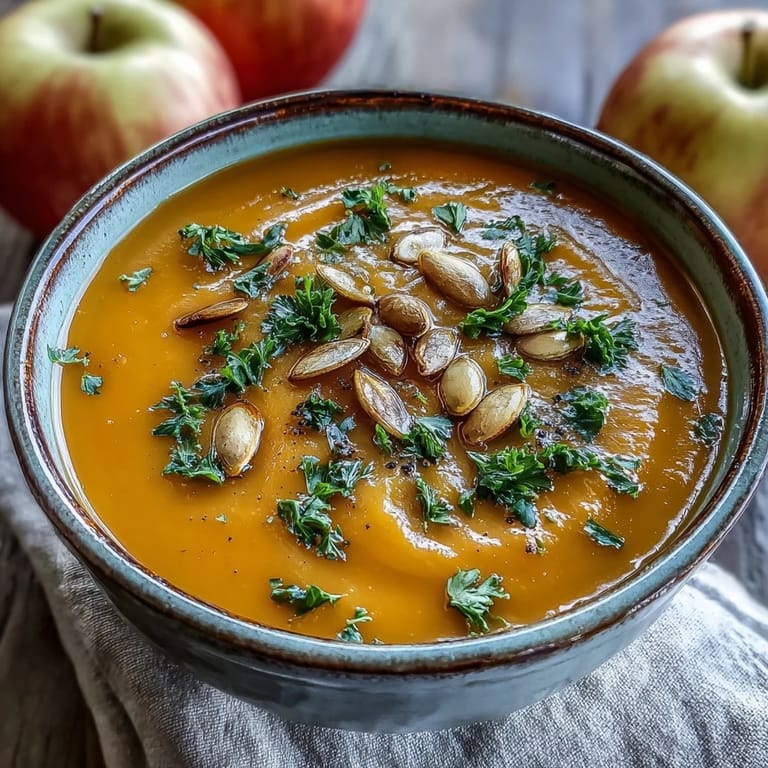
Save There's something about the way butternut squash and apples cook down together that feels like autumn deciding to stay in your kitchen for a while. I discovered this soup on one of those crisp October mornings when my farmers market haul was overflowing with both ingredients, and I couldn't decide which direction to take. Somehow combining them felt obvious in hindsight, but that first spoonful surprised me—the way the sweetness balanced with earthy warmth, how the cinnamon appeared without announcing itself. It became the soup I make when I want to slow down and actually taste what I'm eating.
I made this for my neighbor Sarah last November when she was dealing with a rough week, and watching her face soften over that first bowl felt like the whole recipe validated itself. She came back three days later asking if I could teach her how to make it, which turned into us cooking it together on her kitchen counter while her kids played outside. That's when I knew this wasn't just a soup—it was the kind of dish that brings people in close.
Ingredients
- 1 medium butternut squash (about 2 lbs), peeled, seeded, and cubed: The backbone of everything here; don't skip the peeling even though it's tedious, because raw squash skin in your purée is nobody's friend.
- 2 medium apples, peeled, cored, and diced: Gala or Fuji varieties hold up best during cooking without turning into mush, though that sweetness is exactly what we're after.
- 1 medium yellow onion, chopped: The foundation that stops this from tasting one-dimensional; sauté it properly and you've got the flavor base locked down.
- 2 cloves garlic, minced: Just enough to give the soup complexity without overpowering the delicate squash and apple dance.
- 4 cups vegetable broth: Use something you'd actually drink on its own, because weak broth makes weak soup every single time.
- 1/2 cup apple cider or unsweetened apple juice: This is your secret layer of sweetness that hits differently than just using more apples.
- 1/2 cup heavy cream or coconut milk: Either one transforms the texture into something velvety and luxurious that makes you feel taken care of.
- 1/2 tsp ground cinnamon, 1/4 tsp ground nutmeg, 1/4 tsp ground ginger: The spice trio that whispers autumn; measuring them out dry and smelling them before they hit the pot is part of the whole experience.
- Salt and freshly ground black pepper: Added at the end because you can always taste as you go, but you can't take saltiness back out.
- Toasted pumpkin seeds and fresh parsley for garnish: The final touch that turns a bowl of soup into something people want to photograph.
Tired of Takeout? 🥡
Get 10 meals you can make faster than delivery arrives. Seriously.
One email. No spam. Unsubscribe anytime.
Instructions
- Sauté your aromatics into sweetness:
- Heat olive oil in a large pot over medium heat and add your chopped onion, letting it sit for about four to five minutes until it turns translucent and smells faintly sweet. You're looking for it to soften without browning, which is the moment you know you've built your flavor foundation correctly.
- Toast the spices with your vegetables:
- Stir in your garlic, butternut squash, and apples, cooking for about three minutes until everything starts to get cozy together. Then add your cinnamon, nutmeg, and ginger—the spices should coat everything in a fragrant layer that makes your kitchen smell like someone's been baking.
- Simmer until everything surrenders:
- Pour in your vegetable broth and apple cider, bring it to a boil, then lower the heat and let it bubble gently for twenty-five to thirty minutes until the squash is so tender it falls apart when you touch it with a spoon. The longer you simmer, the more the flavors knit together into something unified and warm.
- Blend until silky smooth:
- Remove from heat and use an immersion blender to purée everything into that velvety texture that makes this soup feel indulgent, or carefully work in batches with a countertop blender if that's what you've got. The smell coming up from the pot at this moment is almost overwhelming in how good it is.
- Finish with cream and taste:
- Stir in your cream or coconut milk and season generously with salt and pepper, tasting as you go because everyone's palate is different. If it's cooled down, reheat gently before serving.
 Save
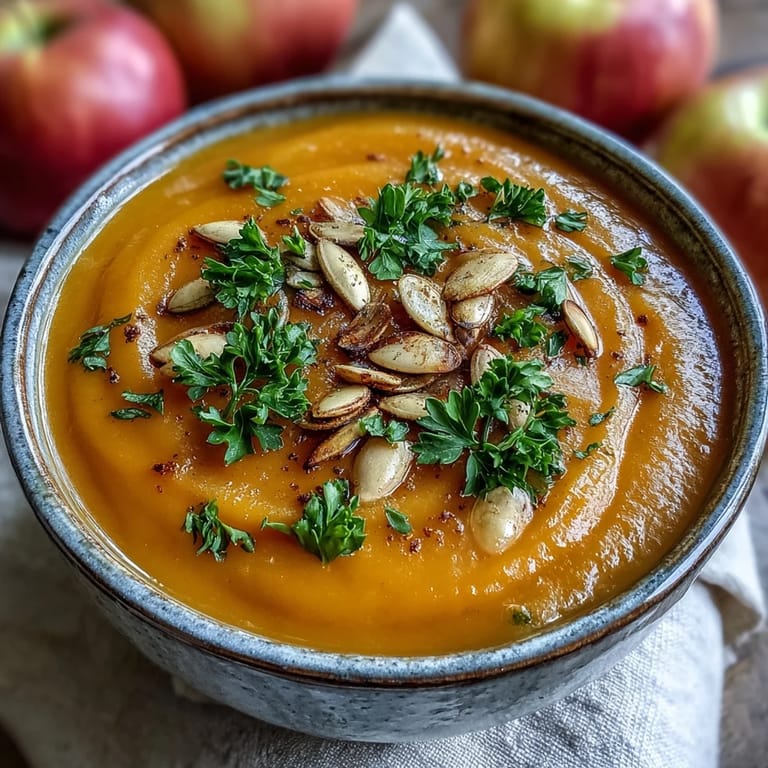
Save There's a moment during autumn when you realize the seasons are actually changing, and for me that's often while I'm standing at the stove stirring this soup. The kitchen fills with this specific smell—cinnamon and squash and something that tastes like patience—and suddenly cooking feels less like a task and more like a small act of self-care.
When to Roast Your Squash First
If you want to deepen the flavor and add a slight caramelized edge, peel and cube your butternut squash, toss it with a little olive oil, and roast it at 400°F for about twenty minutes before adding it to the pot. This extra step concentrates the natural sugars and gives you a more complex, almost nutty undertone that makes people ask what your secret is. I do this version when I have a little extra time and I'm feeling like impressing someone.
Customizing for Your Crowd
This soup is genuinely forgiving about swaps—if you don't have apples, pears work beautifully; if you can't do cream, coconut milk tastes almost identical to the untrained ear. A tiny pinch of cayenne pepper right at the end adds a whisper of heat that makes people pause mid-spoonful wondering what they're tasting, which honestly is my favorite kind of reaction.
Serving and Storage Wisdom
Serve this soup in wide bowls so people can admire the color before eating, and always have crusty bread nearby because half the joy is dipping. It keeps in the refrigerator for about four days and freezes beautifully for up to three months, making it the kind of recipe that rewards you for cooking ahead.
- Toast your pumpkin seeds yourself if you can; the difference between store-bought and fresh-toasted is worth the extra five minutes.
- Don't reheat from frozen directly on the stove—thaw in the refrigerator overnight, then warm gently to prevent the cream from separating.
- Leftover soup tastes even better the next day once all the flavors have had time to settle and find their balance.
 Save
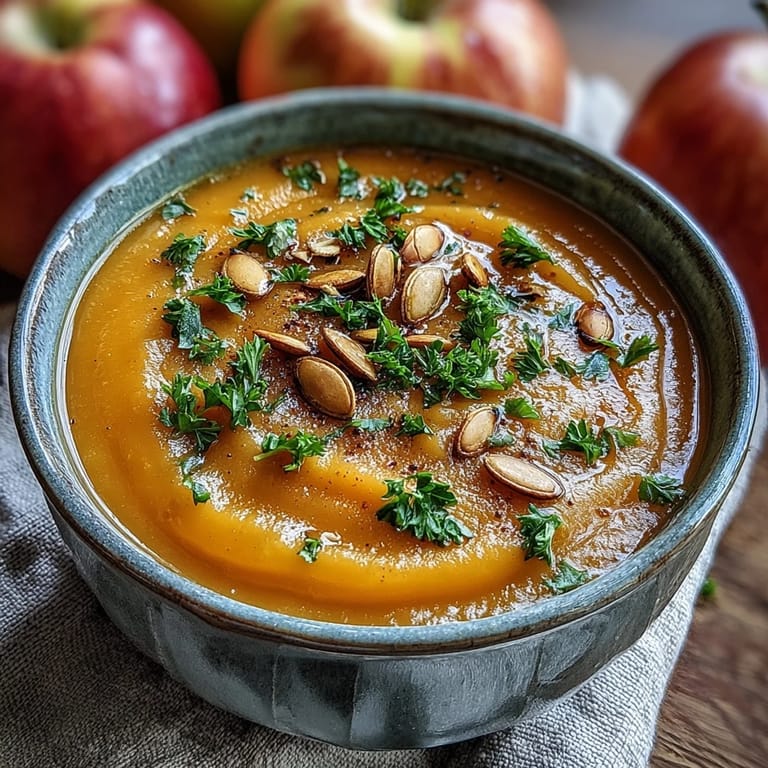
Save This soup reminds me why I love cooking in the first place: it transforms simple things into something that feels both nourishing and a little bit luxurious. Make it once and you'll understand why it becomes a seasonal staple.
Recipe FAQs
- → Can I make this soup ahead of time?
Absolutely! This soup actually tastes better the next day as flavors have time to meld. Store in an airtight container in the refrigerator for up to 4 days. Reheat gently on the stovetop, adding a splash of broth if needed to adjust consistency.
- → What type of apples work best?
Sweet apples like Gala, Fuji, or Honeycrisp work beautifully as they balance the savory squash. Avoid tart varieties like Granny Smith as they can make the soup overly acidic.
- → Can I freeze this soup?
Yes, freeze without the cream for up to 3 months. Thaw overnight in the refrigerator, reheat on the stovetop, and stir in fresh cream when serving for the best texture.
- → How do I get the smoothest texture?
Use an immersion blender directly in the pot for convenience, or carefully blend in batches using a countertop blender. For extra silkiness, pass the puréed soup through a fine-mesh sieve before adding cream.
- → What can I serve with this soup?
Crusty bread, warm rolls, or a simple green salad make perfect accompaniments. For a heartier meal, top with toasted pumpkin seeds or a dollop of Greek yogurt.
- → Is roasting the squash necessary?
Not required, but roasting at 400°F for 20 minutes before simmering adds rich, caramelized depth and intensifies the natural sweetness. It's an extra step worth taking for special occasions.