 Save
Save There's something about a potato soup that stops you mid-week and makes you pause. I was standing in my kitchen on a particularly gray afternoon, staring at a bag of russet potatoes and thinking about the kind of meal that doesn't ask for much but gives everything back. That's when loaded potato soup became my answer to almost every question—comfort, nourishment, the kind of dish that fills the house with warmth before it even touches your mouth.
My neighbor stopped by one winter evening as I was finishing a batch of this, and the smell alone convinced her to stay for a bowl. She'd been skeptical about homemade soup—thought it was some elaborate thing—but watching her face light up at that first spoonful taught me that sometimes the simplest meals are the ones that matter most to people.
Ingredients
- Russet potatoes (4 large, peeled and diced): These are the backbone of your soup; they break down beautifully and create that natural creaminess you're after without needing cream to do all the work.
- Onion and garlic (1 medium onion, chopped; 3 cloves garlic, minced): Don't skip the slow sauté here—this is where the flavor foundation gets built, and it makes all the difference.
- Chicken or vegetable broth (4 cups): Use the good stuff if you can, or at least taste your broth before adding salt; some brands run salty and it'll change your seasoning game.
- Whole or 2% milk (1 cup): This keeps the soup from feeling heavy while adding just enough richness to the party.
- Sour cream (1/2 cup): A little tangy surprise that balances all the richness and prevents the soup from tasting one-dimensional.
- Shredded cheddar cheese (1 1/2 cups, plus extra for garnish): Sharp cheddar if you like a little bite, mild if you want pure comfort; either works, but taste matters here.
- Bacon (6 slices, cooked and crumbled): Cook it until it's crispy and save a tiny bit of the fat if you're feeling fancy—it adds a whisper of depth to the broth.
- Olive oil (2 tablespoons): This is your starting point, your warm-up lap before everything gets creamy.
- Salt, black pepper, and paprika (1 teaspoon salt, 1/2 teaspoon pepper, 1/2 teaspoon paprika): The paprika is optional but don't skip it; it adds a warmth and color that makes people ask what makes it taste so good.
- Green onions (2 sliced, for garnish): These are the bright finale, the thing that cuts through all the richness and reminds you you're eating something alive and fresh.
Tired of Takeout? 🥡
Get 10 meals you can make faster than delivery arrives. Seriously.
One email. No spam. Unsubscribe anytime.
Instructions
- Start with the aromatics:
- Heat your olive oil over medium heat and add the chopped onion, letting it soften and turn translucent over about 5 minutes. You'll notice the kitchen starting to smell like home; that's when you know you're on the right track.
- Build that flavor layer:
- Add the minced garlic and stir it around for just a minute—you want it fragrant but not browned. This quick step unlocks so much aroma and taste.
- Add the potatoes and broth:
- Stir in your diced potatoes, pour in the broth, and bring everything to a boil. Once it's bubbling, turn the heat down and let it simmer uncovered for 15 to 20 minutes until the potatoes are so tender a fork goes right through them.
- Blend to your preference:
- This is where you get to choose your adventure: use an immersion blender to puree it all smooth and silky, or blend just half of it and leave the rest chunky for texture. I usually go somewhere in the middle—enough blending that it feels creamy but some potato pieces hanging around for bite.
- Bring in the cream and cheese:
- Turn the heat down to low and stir in the milk, sour cream, shredded cheddar, salt, pepper, and paprika. Keep stirring gently for about 5 minutes until the cheese melts completely and the whole thing turns into this beautiful, velvety consistency.
- Taste and adjust:
- Before you finish, take a spoonful and taste it. Sometimes the broth brings its own salt, sometimes you need a touch more; this is your moment to make it exactly what you want.
- Serve it warm:
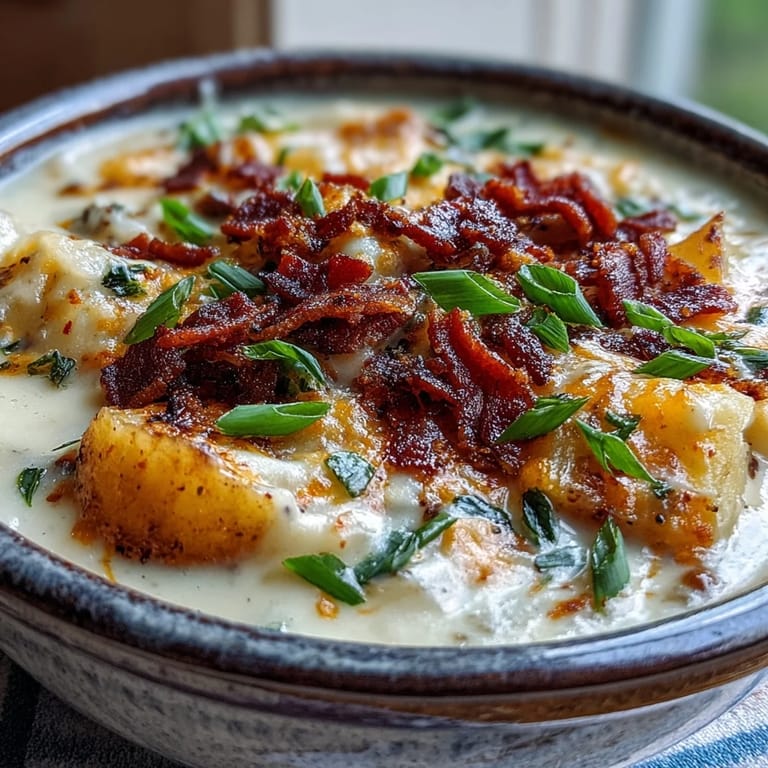
- Ladle it into bowls and pile on the toppings: crumbled bacon, extra cheddar, fresh green onions, maybe a crack of black pepper. Let people dress it the way they like it.
 Save
Save My kid used to refuse anything labeled soup until they tried a bowl of this with extra bacon and cheese. Watching them ask for seconds without being prompted felt like some kind of kitchen victory, but it also reminded me that good food isn't about impressing people—it's about feeding them something they actually want to eat.
Texture and Creaminess
The magic of this soup is that it gets creamy from the potatoes themselves, not just from the dairy. When you cook russet potatoes in liquid and break them down, the starch releases and creates this natural thickness that feels luxurious without weighing you down. You're not fighting the soup to make it the right consistency; you're just letting it become what it wants to be.
Flavor Building
The sour cream is what most people don't expect but what makes this soup taste more interesting than it looks. That little tang at the end prevents the whole thing from feeling one-note and heavy, and it's subtle enough that people can't always identify what's making it taste good—they just know it's right. Paprika does something similar, warming the flavor and hinting at something a little deeper without announcing itself.
Make It Your Own
This recipe is sturdy enough to handle your changes and flexible enough to become whatever you need it to be on any given day. Swap in carrots or celery for extra vegetables, use heavy cream if you want it richer, add jalapeños if your mood is spicy, leave out the bacon if that's what your table needs. The foundation is strong; everything else is you making it speak your language.
- For extra creaminess without heaviness, try half milk and half heavy cream, or substitute a bit of the broth with cream.
- Prepare this soup a day or two ahead and reheat it gently on the stove—the flavors actually deepen and get better as it sits.
- This freezes beautifully for up to three months; thaw overnight in the fridge and warm through gently so the cream stays silky.
 Save
Save There's nothing fancy about loaded potato soup, and that's exactly why it works. It's the kind of meal that asks for nothing but gives back warmth, comfort, and the feeling that someone cared enough to cook.
Recipe FAQs
- → Can I make this soup ahead of time?
Yes, this soup prepares well in advance and freezes beautifully. Let it cool completely before storing in airtight containers for up to 3 days in the refrigerator or 3 months in the freezer. Reheat gently over low heat, stirring occasionally to maintain the creamy consistency.
- → How do I make it vegetarian?
Simply omit the bacon or use a plant-based bacon alternative, and ensure you're using vegetable broth instead of chicken broth. The result remains just as creamy and satisfying without any meat products.
- → Can I use different potatoes?
While russet potatoes provide the best texture due to their high starch content, you can substitute Yukon Gold potatoes for a slightly creamier result. Avoid waxy potatoes like red potatoes, as they won't break down as well during cooking.
- → How can I make it extra creamy?
Substitute part or all of the milk with heavy cream for an even richer texture. You can also add an extra 1/4 cup of sour cream or cream cheese toward the end of cooking for indulgent creaminess.
- → What toppings work well?
Beyond the classic bacon, cheddar, and green onions, try adding diced jalapeños for heat, diced tomatoes for freshness, or a dollop of sour cream. Chives, shredded lettuce, or even crushed crackers make excellent additions for texture and flavor.
- → Why did my soup separate?
Soups with dairy can separate if boiled too vigorously after adding cheese and milk. Always keep the heat low once dairy ingredients are incorporated, and avoid bringing it to a rolling boil. Gentle stirring helps maintain a smooth, emulsified consistency.