 Save
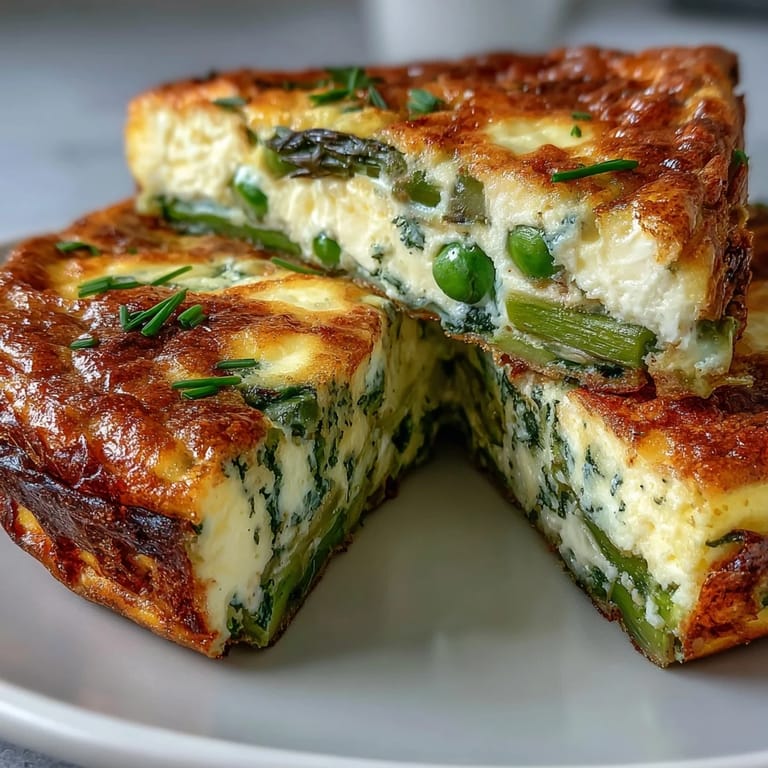
Save Steam rising from the skillet was the first thing I noticed, mingled with the grassy scent of asparagus and fresh herbs that seemed to wake up the whole kitchen. Making this frittata always feels like ushering in spring—even on a Tuesday when sunlight flickers through the blinds and you need something cheerful for lunch. Sometimes, I catch myself grinning as peas bounce from my knife or goat cheese gets a little too crumbly, reminding me that good food rarely arrives without a little mess. The ritual of whisking eggs and folding in fragrant chives is now a small comfort, especially when my mornings are slow. This frittata recipe promises more than a meal: it's a celebration of everything tender and green that spring brings.
One chilly April afternoon, I invited a neighbor for brunch after her garden bloomed early. As we sliced asparagus, she admitted she'd never tried goat cheese, so we laughed as she tentatively took a forkful of the finished frittata. The kitchen was filled with chatter about which spring vegetables tasted sweetest, and we both agreed there was something almost magical about how the peas sparkled against the egg. By the time we finished the meal, even the most reluctant herb skeptics were believers. That meal made me realize how a frittata encourages you to share, experiment, and celebrate the little moments.
Ingredients
- Asparagus: Chosen for its crispness and delicate flavor—slice it just before cooking for best results.
- Fresh or Frozen Peas: Both work beautifully; I go for fresh when they’re in season but frozen peas keep their sweetness if spring is late.
- Baby Spinach: Roughly chopping helps it wilt evenly and prevents big leafy bites.
- Spring Onions: Thin slices add subtle zing and a gentle onion flavor without overpowering.
- Eggs: High-quality eggs will make your frittata fluffier and richer—always whisk thoroughly.
- Whole Milk or Cream: Cream gives a silkier finish, but milk keeps it light; both enhance texture.
- Goat Cheese: Crumble gently—chunks create creamy surprises throughout the dish.
- Unsalted Butter: Provides a golden, non-stick base and subtle sweetness.
- Fresh Chives: These add brightness; chop finely right before use for maximum aroma.
- Fresh Dill or Parsley: Either herb lifts the flavors, and I alternate depending on which I have handy.
- Salt and Freshly Ground Black Pepper: Season confidently—taste before pouring your egg mixture in.
Tired of Takeout? 🥡
Get 10 meals you can make faster than delivery arrives. Seriously.
One email. No spam. Unsubscribe anytime.
Instructions
- Warm Up the Oven:
- Set your oven to 375°F (190°C) and let the warmth fill the house as you prepare your ingredients.
- Sauté the Spring Veggies:
- Melt the butter in a large oven-safe skillet and sauté asparagus until vivid, then stir in peas and spring onions until just tender, finishing with spinach so it wilts quickly.
- Whisk the Egg Mixture:
- In a bowl, whisk eggs with milk or cream, herbs, salt, and pepper; do this until airy and well-blended, a little patience here goes a long way.
- Combine in the Skillet:
- Pour the egg mixture gently over your veggies; cook without stirring for a few minutes, watching the edges set while the center stays loose.
- Add the Goat Cheese:
- Scatter crumbled goat cheese across the top, letting it sink slightly into the eggs for creamy pockets after baking.
- Bake the Frittata:
- Slip the skillet into the oven and bake until the frittata puffs and just sets in the center, usually 10–12 minutes.
- Rest, Slice, and Serve:
- Let the frittata cool a bit before slicing—this helps hold its shape, and you can enjoy it warm or at room temperature.
 Save
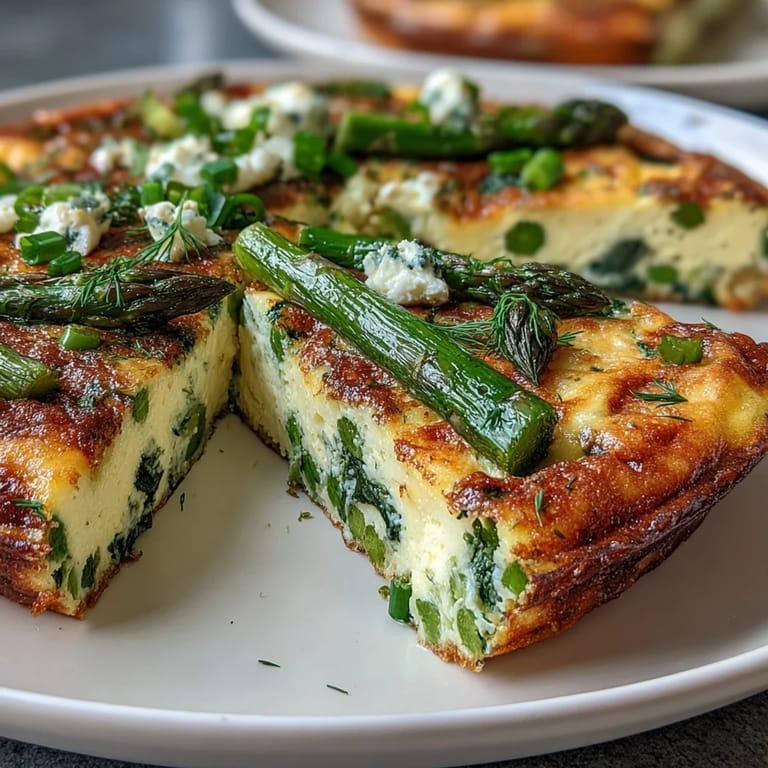
Save There was a brunch where the frittata was nestled among tulip bunches and clinking mugs, and someone confessed it was the best thing they'd tasted that spring. Suddenly, egg dishes weren’t just obligatory sides—they felt festive and comforting in their own right. I remember the ease of cutting slices and watching the steam spiral upward, smiles growing with every bite. From then on, I started keeping asparagus and herbs on hand ‘just in case’. Now, making this dish is less about the final meal and more about those moments shared around the table.
How to Prep Ahead for Busy Mornings
I’ve learned that chopping vegetables and crumbling goat cheese the night before shortens morning prep and keeps the flavors fresh. Eggs whisked in advance can separate, so I wait until right before cooking for the silkiest texture. Herb chopping is a fragrant way to wake up sleepy senses, and even on chaotic days, prepping ahead means I can focus on sipping coffee while the frittata puffs in the oven.
Pairings: What Goes Well With Your Spring Frittata
A crisp green salad with lemon vinaigrette brings out the earthy flavors while crusty bread adds substance for hungrier guests. If I’m feeling fancy, Sauvignon Blanc feels just right—its herbal notes complement the frittata beautifully. For non-drinkers, sparkling water with lemon makes every bite feel refreshing and light. It’s fun to experiment and discover which pairings make each brunch feel new.
Quick Fixes and Substitutions You’ll Appreciate
Sometimes you open the fridge and find zucchini or fava beans begging to be included—don’t hesitate, these spring veggies slot right in. If you or your guests avoid dairy, plant-based milk and vegan cheese still give a rich finish without compromising flavor. I’ve made this frittata so many ways it’s hard to pick a favorite, but adaptability is its strongest suit.
- If your skillet isn’t oven safe, transfer everything to a baking dish before pouring in eggs.
- Make mini frittatas in muffin tins for grab-and-go meals.
- A pinch of smoked paprika or chili flakes wakes up the flavor on rainy days.
 Save
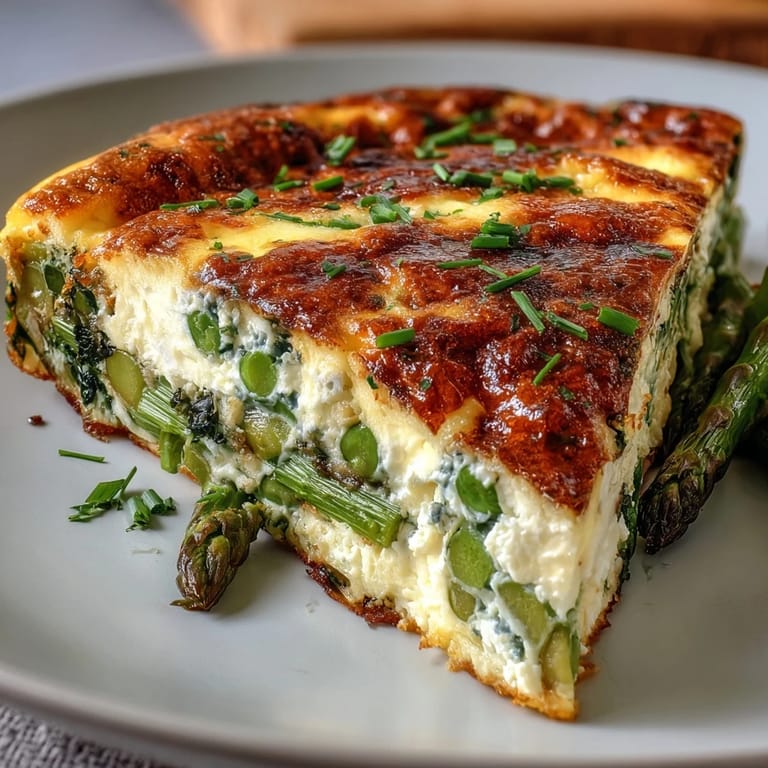
Save Each spring frittata is a small celebration—sometimes quiet, sometimes lively, always delicious. I hope your kitchen fills with color and laughter, and you try new combinations as seasons change.
Recipe FAQs
- → How do I keep the frittata fluffy?
Whisk eggs with milk or cream, avoid overcooking, and bake until just set for a tender, airy result.
- → Can I use frozen peas for the frittata?
Yes, frozen peas work well. Add them straight to the skillet with the asparagus and spring onions.
- → What herbs can be substituted for chives or dill?
Try parsley, basil, or tarragon for a different flavor profile in your spring frittata.
- → Is this dish suitable for gluten-free diets?
Yes, all main ingredients are naturally gluten-free. Always check cheese and butter packaging for hidden gluten.
- → Can I prepare the frittata in advance?
Absolutely! Cool, slice, and refrigerate. Enjoy chilled or gently rewarmed for convenient meal prep.
- → What can I serve on the side?
Pair with a green salad, crusty bread, and a crisp Sauvignon Blanc or sparkling water with lemon.