 Save
Save The smell hit me first—garlic and chili sizzling in hot oil, sharp and almost electric. I was watching a street vendor in Bangkok fold rice paper around beef and herbs with the speed of someone who'd done it ten thousand times. I didn't understand a word she said, but when she handed me the roll and pointed at the sauce, I got it. That bite—cool herbs, warm spiced beef, the snap of cucumber—taught me more about balance than any cookbook ever could.
I made these for a summer dinner party once, nervous because half my guests had never touched rice paper before. Within ten minutes, everyone was elbow-deep in the filling bowls, laughing at their lumpy first attempts and stealing basil from each other's plates. By the end of the night, we'd gone through double the wrappers I'd bought. Someone texted me the next day asking for the recipe, and I knew I'd found a keeper.
Ingredients
- Ground beef (85-90% lean): Just enough fat to keep the filling juicy without making it greasy; drain excess if your beef runs fatty.
- Thai basil: The licorice-like, peppery punch is what makes this authentically Thai; regular basil plus mint can work in a pinch, but it's not quite the same.
- Fish sauce: Don't skip it; this is the umami backbone that makes everything taste deeper and more complex than plain salt ever could.
- Thai bird's eye chilies: Tiny but fierce; start with one if you're cautious, because the heat builds fast.
- Rice paper wrappers: Look for the large, round ones in the Asian aisle; they turn from stiff discs into silky wrappers with just a few seconds in warm water.
- Fresh vegetables and herbs: Cucumber, carrot, lettuce, cilantro, mint, and more basil; these add crunch, color, and freshness that balance the rich beef.
- Lime juice: Brightens the beef at the end and sharpens the dipping sauce; always use fresh, never bottled.
- Jasmine rice or vermicelli: Optional but traditional; it adds body and makes each roll more filling without weighing it down.
Tired of Takeout? 🥡
Get 10 meals you can make faster than delivery arrives. Seriously.
One email. No spam. Unsubscribe anytime.
Instructions
- Make the sauce base:
- Stir together soy sauce, fish sauce, oyster sauce, dark soy if using, and sugar until the sugar dissolves and the mixture looks glossy. Add a splash of water to loosen it into a pourable consistency.
- Start the aromatics:
- Heat oil in a wok or skillet over medium-high, then add garlic and shallot. Stir-fry for 30 to 45 seconds until golden and fragrant, watching closely so they don't burn.
- Add the heat:
- Toss in the minced chilies and white parts of the green onions. Stir-fry another 20 to 30 seconds until the kitchen smells like a Thai street market.
- Cook the beef:
- Crumble in the ground beef, breaking it up with a spatula. Cook for 4 to 6 minutes, stirring often, until it's mostly browned and starting to caramelize in spots.
- Add the pepper:
- Stir in the diced red bell pepper and cook 2 to 3 minutes until it softens slightly but still has a bit of snap.
- Coat with sauce:
- Pour the prepared sauce over the beef and toss everything together. Let it cook 2 to 3 minutes more, allowing the sauce to reduce and cling to the meat.
- Finish with herbs:
- Turn the heat to low, add the chopped Thai basil and green parts of the green onions, and toss just until the basil wilts, about 30 to 45 seconds. Remove from heat and stir in the lime juice, then let the mixture cool to room temperature.
- Prep your station:
- While the beef cools, cook and cool your rice or noodles if using, and arrange all your vegetables and herbs in bowls. Set up a shallow dish of warm water and a clean, lightly oiled board or plate for rolling.
- Make the dipping sauce:
- Whisk together fish sauce, lime juice, sugar, and water until the sugar dissolves. Stir in garlic, sliced chilies, and any optional carrot or herbs, then taste and adjust until it's balanced—salty, sour, sweet, and spicy all at once.
- Soften the wrappers:
- Dip one rice paper wrapper in warm water for 3 to 5 seconds, rotating to moisten it evenly, then lay it on your board. It will continue to soften as you work.
- Build the roll:
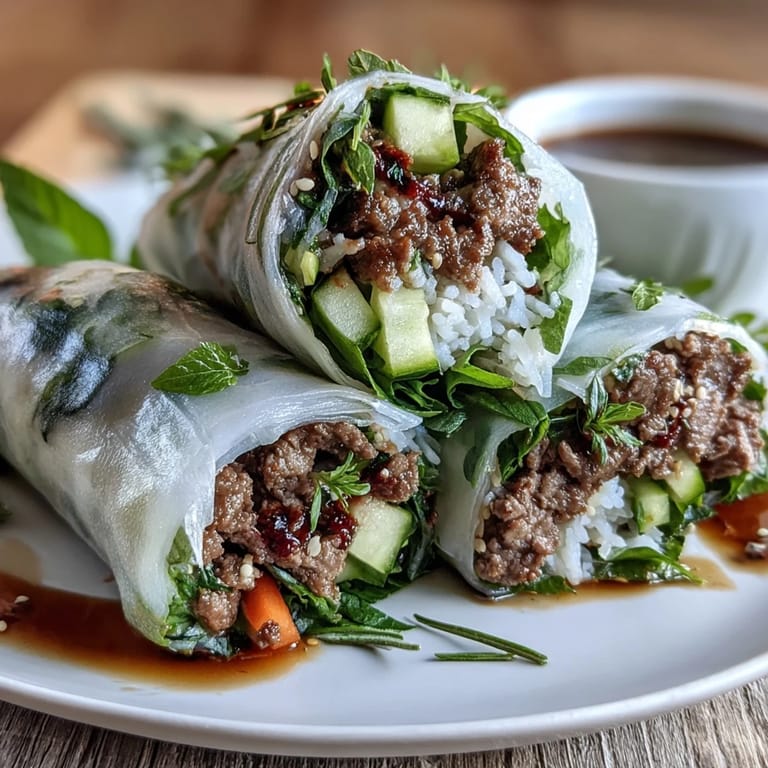
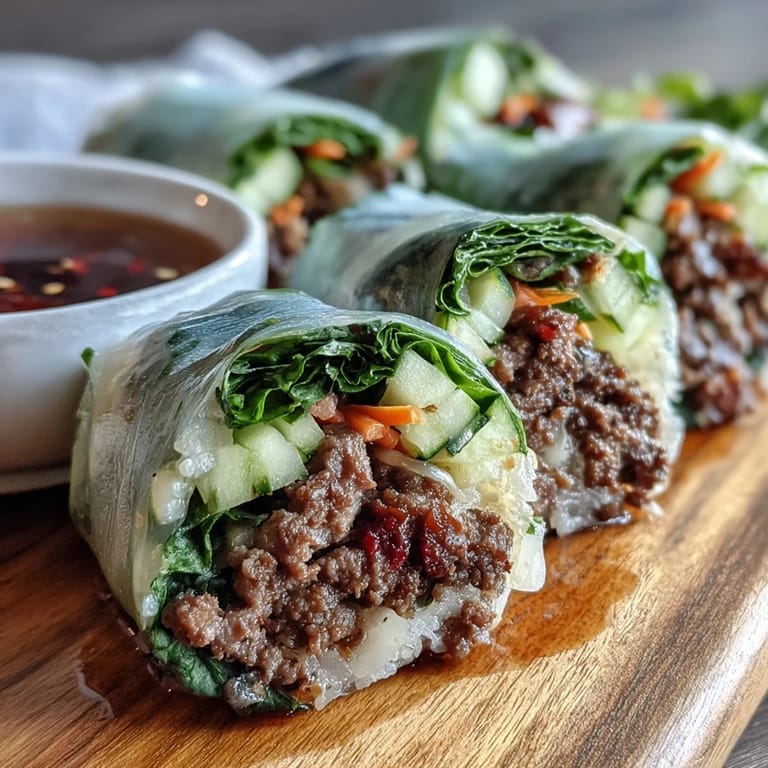
- Place a small pile of rice or noodles on the bottom third of the wrapper, then top with beef, cucumber, carrot, lettuce, and a generous handful of fresh herbs. Don't overfill or it won't close.
- Roll it up:
- Fold the bottom edge over the filling, tuck in the sides, then roll tightly away from you into a neat cylinder. Place seam-side down on a plate and repeat with the remaining wrappers and filling.
- Serve:
- Serve the rolls whole or sliced diagonally, with the dipping sauce on the side. If not eating immediately, cover with a damp towel and plastic wrap and refrigerate up to 2 to 3 hours, then let them sit at room temperature 10 to 15 minutes before serving.
 Save
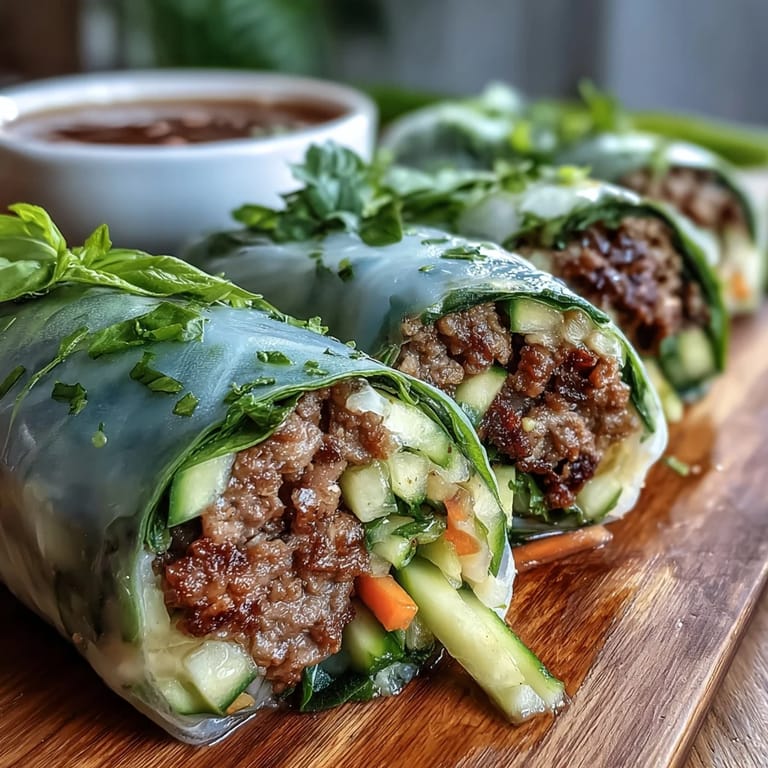
Save The first time I got the roll exactly right—tight, even, with the herbs visible through the wrapper like stained glass—I held it up like a trophy. My partner laughed and said it looked too pretty to eat. We ate it anyway, dipping it into the sauce until it was gone in four bites, and I immediately started rolling another one. That's the thing about these rolls: they disappear fast, but making them never feels like a chore.
How to Store and Serve
Fresh rolls are always best within the first hour, when the rice paper is still soft and the vegetables are crisp. If you need to make them ahead, cover them with a damp paper towel and then plastic wrap, and refrigerate for up to 2 to 3 hours. Before serving, let them sit at room temperature for 10 to 15 minutes so the wrappers soften again. The beef filling can be made a day ahead and stored in the fridge, which actually makes assembly faster and less stressful.
Variations and Swaps
You can swap the beef for ground turkey, chicken, or even crumbled tofu if you want a lighter or vegetarian version. I've used shredded rotisserie chicken in a pinch, tossed with the same sauce, and it was just as good. If you can't find Thai basil, use a mix of regular basil and mint; it's not identical, but it's close enough to fool most people. For a low-carb version, skip the rice or noodles entirely and load up on extra vegetables and herbs.
Serving Suggestions
These rolls work beautifully as a light lunch, an appetizer before a bigger Thai meal, or even as the main event if you serve them with a side of jasmine rice and a crisp cucumber salad. I love putting out all the components and letting people roll their own; it's interactive, fun, and everyone gets exactly what they want. A cold beer or iced Thai tea on the side makes it feel like a real occasion.
- Serve with extra lime wedges and a small dish of chili oil for those who want more heat.
- Pair with a tangy green papaya salad or a simple soup like tom yum for a full Thai spread.
- If you have leftover beef, use it in lettuce wraps, over rice bowls, or stirred into fried rice the next day.
 Save
Save There's something deeply satisfying about pulling a perfect roll off the board, tight and colorful and ready to dip. These rolls have become my go-to whenever I want something that feels special but doesn't require hours in the kitchen.
Recipe FAQs
- → How far in advance can I prepare the components?
The beef filling can be made up to 2 days ahead and stored refrigerated. Vegetables can be prepped 1 day in advance. However, rolls are best assembled within 2-3 hours of serving as the rice paper can become soggy over time. If storing assembled rolls, cover with a damp towel and plastic wrap to prevent drying out.
- → Can I make these rolls gluten-free?
Yes, use gluten-free soy sauce or tamari, and ensure your oyster sauce is certified gluten-free. Rice paper wrappers are naturally gluten-free. The remaining ingredients are all naturally gluten-free, making these easily adaptable for gluten-free diets.
- → What can I substitute for Thai basil?
Italian basil combined with mint makes a good substitute for Thai basil's distinctive anise notes. Use about 3/4 the amount of Italian basil and add fresh mint to compensate. Sweet basil works too, though it lacks the peppery kick that Thai basil provides.
- → How do I prevent rice paper from tearing?
Use warm—not hot—water and dip wrappers for just 3-5 seconds. They'll continue softening as you work. Handle gently and don't overfill. Work on a lightly oiled surface if sticking occurs. If a wrapper tears, double-layer with a second wrapper or use torn pieces for patching.
- → Can I skip the rice or noodles inside?
Absolutely. Omitting rice or noodles creates a lighter, lower-carb roll with more focus on the beef and vegetables. Simply increase the vegetable and herb portions slightly to maintain the filling volume. The rolls will be easier to roll tightly without the grains.
- → How spicy are these rolls?
The recipe includes Thai bird's eye chilies, which are quite spicy. For medium heat, use 1-2 chilies. For mild heat, reduce to half a chili or substitute with milder peppers. The dipping sauce also contains chilies, so adjust both components to your preferred spice level. The fresh herbs and cool vegetables help balance the heat.