 Save
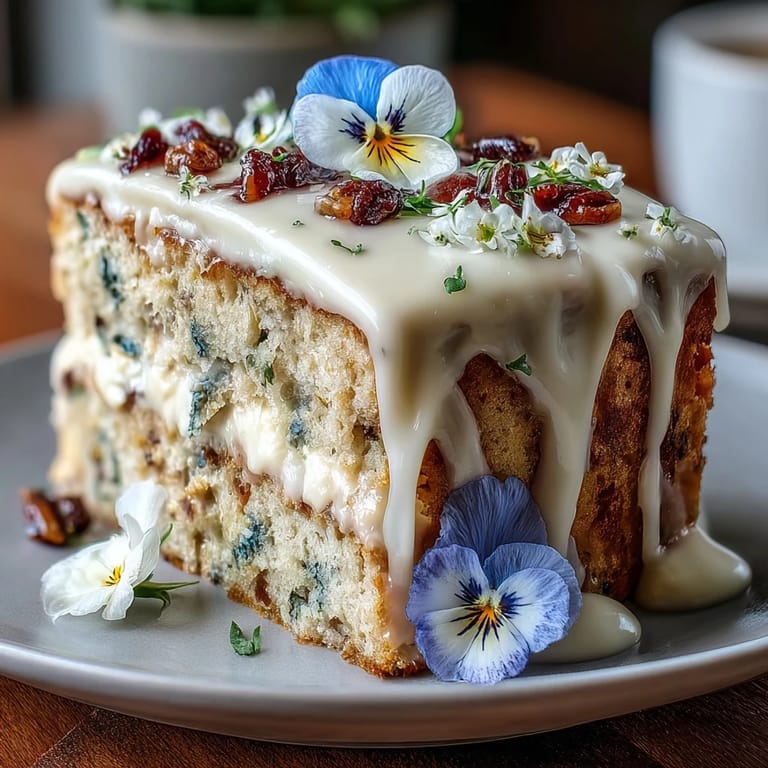
Save My neighbor handed me a bundle of violets wrapped in damp paper towels one March afternoon, insisting I had to try pressing them between book pages. I'd never thought much about edible flowers until that moment, but watching them flatten into papery jewels over a few weeks sparked something. When I finally layered them onto a vanilla cake, still learning how to handle their delicate edges, I understood why she was so excited—they transformed something ordinary into a celebration, even if it was just a Tuesday.
I made this for my sister's bridal shower on the first warm Saturday of April, and something about watching people lean in to admire the flowers before tasting it made me realize how a cake can do more than satisfy hunger. Someone asked me if the flowers were real, which made me laugh—they'd expected something too delicate to be true. That moment of disbelief before the first bite became my favorite part of serving it.
Ingredients
- All-purpose flour (2 1/2 cups): The foundation of a tender crumb; sift it with the baking powder and salt to avoid lumps and distribute the leavening evenly.
- Baking powder (2 1/2 tsp): This gives the cake its gentle rise without heaviness, so measure carefully and don't substitute.
- Salt (1/2 tsp): A pinch that wakes up the vanilla and balances sweetness in ways you won't consciously notice.
- Unsalted butter (1 cup, softened): Softened butter creams into sugar more easily, trapping air that becomes those delicate crumbs everyone loves.
- Granulated sugar (1 3/4 cups): The sweetness and structure of the cake depends on proper creaming time with butter, so don't rush those first minutes.
- Large eggs (4, at room temperature): Room temperature eggs incorporate more smoothly and create a more tender texture than cold ones pulled straight from the fridge.
- Pure vanilla extract (1 tbsp): Real vanilla makes a difference here since it's not hidden behind other flavors; imitation can taste thin and sharp.
- Whole milk (1 cup, at room temperature): The temperature matters because cold milk can shock the batter and create an uneven texture.
- Heavy whipping cream (2 cups, cold): Keep this genuinely cold before whipping, or you'll end up with butter instead of frosting, which I learned the hard way.
- Powdered sugar (1/2 cup): This dissolves into the cream without any grittiness, unlike granulated sugar which would weep.
- Pressed edible flowers (1/2 to 1 cup): Hunt for organically grown flowers and press them yourself for at least 24 hours between heavy books and parchment.
- Fresh mint leaves (optional): A whisper of green between the flowers adds visual rhythm and a subtle coolness.
Tired of Takeout? 🥡
Get 10 meals you can make faster than delivery arrives. Seriously.
One email. No spam. Unsubscribe anytime.
Instructions
- Heat the oven and prepare your pans:
- Turn your oven to 350°F and line two 8-inch round pans with parchment, then lightly grease them. This double layer of protection keeps the edges from sticking while you're learning.
- Combine the dry ingredients:
- Sift your flour, baking powder, and salt into a bowl and set it aside. Sifting feels old-fashioned, but it breaks up any clumps and distributes the baking powder so your cake rises evenly.
- Cream butter and sugar until fluffy:
- Beat softened butter with sugar for about 3 to 4 minutes until it looks pale and airy, like clouds. This is where the cake's tender texture begins, so don't skip this step or rush it.
- Add eggs one at a time:
- Drop each egg into the mixture and beat well before adding the next one. You'll notice how the batter changes texture with each addition, becoming richer and smoother.
- Stir in vanilla:
- A tablespoon of real vanilla extract goes in after all the eggs are incorporated, giving the whole batter a warm, fragrant quality.
- Alternate flour and milk:
- Add about a third of the flour mixture, then half the milk, then another third of flour, then the rest of the milk, ending with the last bit of flour. Mix just until combined—overmixing develops the gluten and makes the cake tough, which happened to me once and taught me to trust the spoon, not my impatience.
- Divide batter and bake:
- Split the batter evenly between pans, smooth the tops, and bake for 30 to 35 minutes until a toothpick comes out clean. The kitchen will smell like vanilla and butter, and you'll start wondering if you should have made two cakes.
- Cool properly:
- Let cakes sit in the pans for 10 minutes so they set slightly, then turn them out onto wire racks to cool completely. Turning them out too early means they'll crack; waiting too long means they'll steam themselves and become dense.
- Whip the cream frosting:
- In a bowl that's actually cold to the touch, beat heavy cream with powdered sugar and vanilla until stiff peaks form. This takes maybe 3 minutes and feels like a small miracle.
- Assemble the cake:
- Place one layer on a plate, spread with whipped cream, set the second layer on top, then frost the sides and top. The frosting is forgiving and soft, so take your time with a spatula or even just a knife.
- Press flowers onto the frosting:
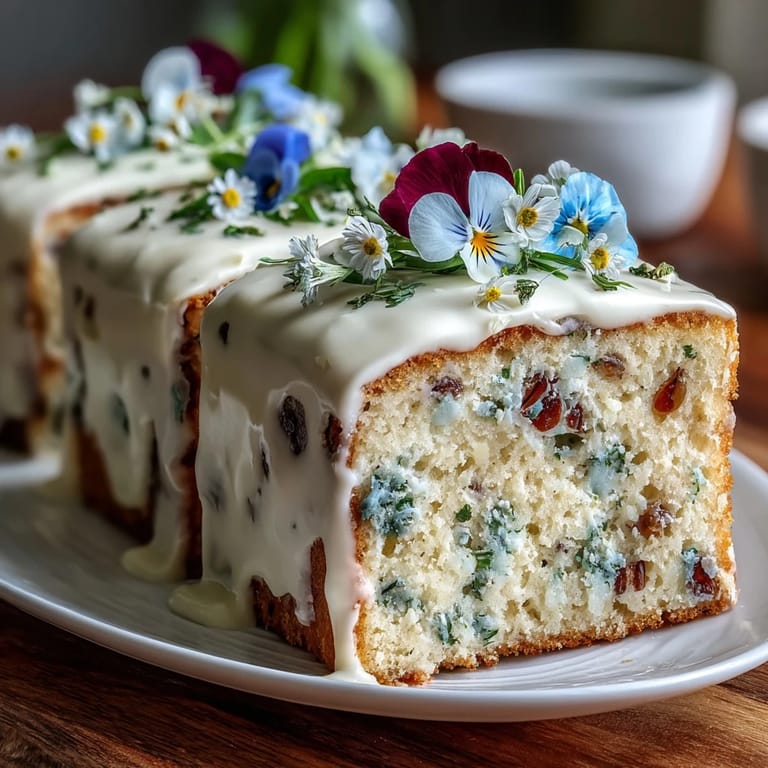
- This is where the magic happens—gently press your dried flowers onto the frosting, arranging them as you go. Step back every few flowers to see the pattern emerging, and don't overthink it; natural-looking arrangements beat perfectly geometric ones.
- Chill before serving:
- Refrigerate for at least 30 minutes so the frosting sets and the flowers stay firmly in place. This also gives you time to breathe and admire what you've made.
 Save
Save The first person to serve this cake to was my boss, who ate a slice at a work gathering and then came back for another the next day. She told me it tasted like spring, which sounds like a greeting card but somehow felt like the highest compliment—a cake that didn't just taste good but actually captured a feeling.
Pressing Flowers at Home
Pressing flowers is simpler than it seems and transforms how you see your garden or a walk through a park. I collect violets, pansies, nasturtiums, and chamomile, laying them between parchment paper and then slipping them between the heaviest books I own—old cookbooks work perfectly because they're dense and unforgiving. After 24 hours, they're still soft and colorful, but by 48 hours they become papery and stable enough to handle without fear of tearing.
Why This Cake Looks Like Spring
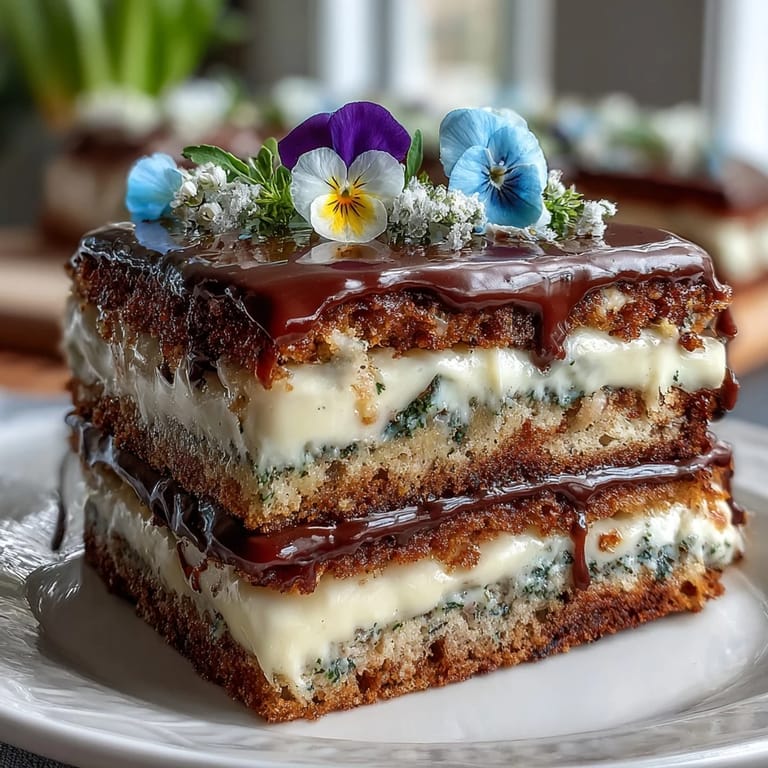
The pale vanilla cake and pure white frosting create a blank canvas that makes pressed flowers look like tiny stained glass windows. I've learned to arrange them asymmetrically around the sides—sometimes clustered in one spot, sometimes scattered like they've just landed. The cake doesn't need more than this; the flowers do all the talking, and that simplicity is what makes it feel elegant without trying too hard.
Variations and Pairings
This cake is a quiet canvas waiting for your own touches. I've added lemon zest to brighten the vanilla, and I've paired it with sparkling wine and floral teas that echo the flowers on top. Some versions benefit from a delicate layer of lemon curd between the layers, while others stay pure vanilla so nothing competes with the visual drama of the flowers.
- Add 1 to 2 teaspoons of lemon zest to the batter for a subtle citrus note that wakes up the vanilla.
- Try filling the layers with a thin spread of lemon curd or rose jam for depth without overwhelming the frosting.
- Serve alongside sparkling lemonade or a chamomile tea that echoes the flowers on the cake.
 Save
Save This cake taught me that sometimes the most impressive dishes are the simplest ones, held together by patience and small details. Make it when spring arrives, or whenever you need something that tastes like hope.
Recipe FAQs
- → How are the pressed edible flowers prepared?
Flowers should be organically grown and pressed between parchment with heavy books for at least 24 hours to ensure they are dry and flat.
- → Can I add a citrus flavor to the cake?
Yes, adding 1–2 teaspoons of lemon zest to the batter offers a bright, citrusy note that complements the vanilla base.
- → What type of cream is best for the frosting?
Use cold heavy whipping cream beaten with powdered sugar and vanilla extract until stiff peaks form for a light, airy frosting.
- → How do I prevent the cake from drying out?
Properly measuring ingredients and avoiding overmixing help maintain moistness, while chilling after frosting preserves freshness.
- → What tools are recommended for decorating the cake?
Use an offset spatula for smooth frosting application and gently press flowers onto the cake for a delicate finish.